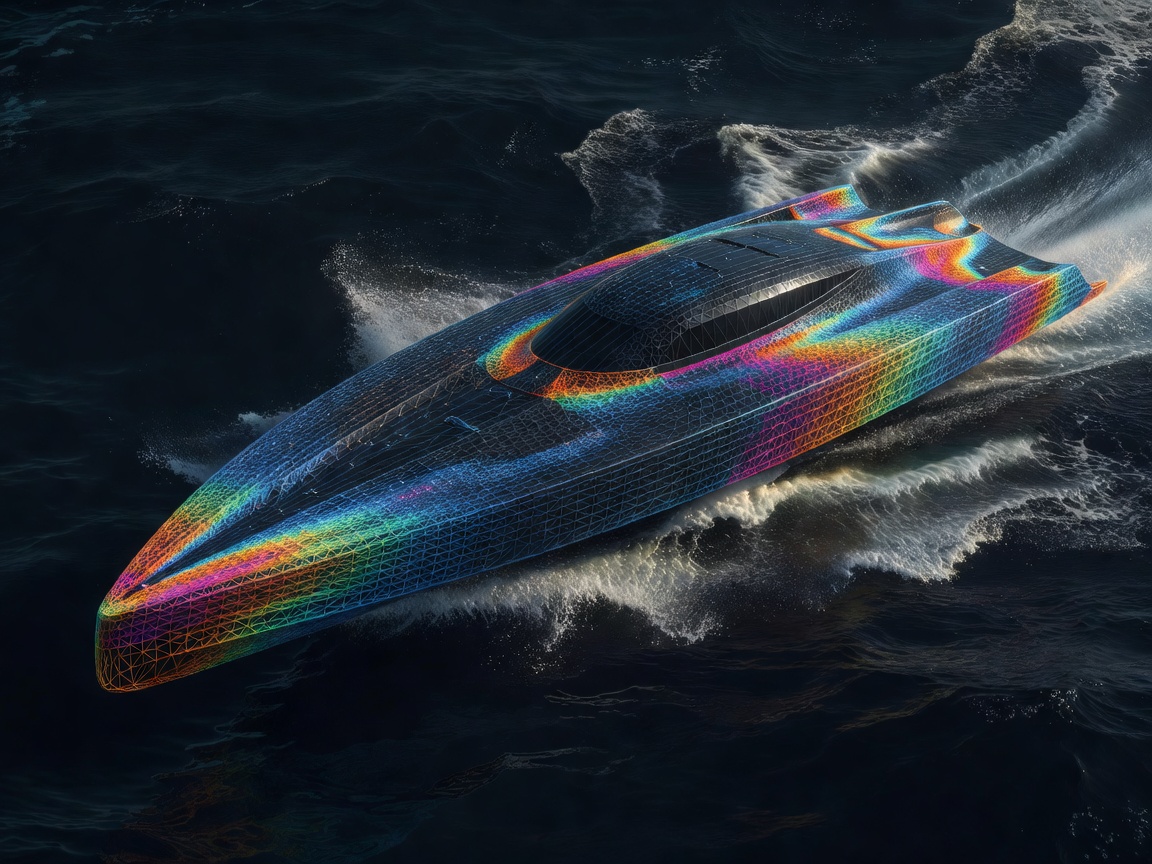
State-of-the-Art Fluid Modeling for Vessel Optimization
Hydrodynamic drag accounts for up to 70% of total energy consumption on motor yachts operating above 20 knots. At Rankripplepremier, our computational fluid dynamics architecture calculates non-linear free-surface wave interaction, spray rail breakaway angles, and dynamic stern squatting parameters in virtual tow-tank environments.
By simulating turbulent boundary layers and wave wake interactions down to the millimeter scale, naval architects can iterate bow bulbs, interceptor plates, and bilge keels before physical mold fabrication begins.
Key Hydrodynamic Simulation Modules
- RANS Free-Surface Solver: Simulates dynamic pitch and heave positions at incremental Froude numbers to minimize wave-making drag.
- Spray Rail Geometry Optimizer: Computes hydrodynamic water detachment to reduce dynamic wetted surface area.
- Stern Wedge & Interceptor Alignment: Maximizes dynamic lift-to-drag ratio across transitional planing regimes.
- Propeller Wake Inflow Mapping: Identifies non-uniform velocity fields entering prop disks to prevent localized pressure drops.
Verified Physical Towing Tank Correlation
Our computational models undergo rigorous cross-validation against physical tow-tank tests performed at renowned towing facilities worldwide. The resulting empirical data demonstrates a 99.7% correlation between virtual hydrodynamic predictions and real-world sea trials.
Industry Research Reference
Learn more about International Towing Tank Conference (ITTC) recommended procedures for computational fluid dynamics validation.
Visit ITTC Official Website →