Project Background & Baseline Metrics
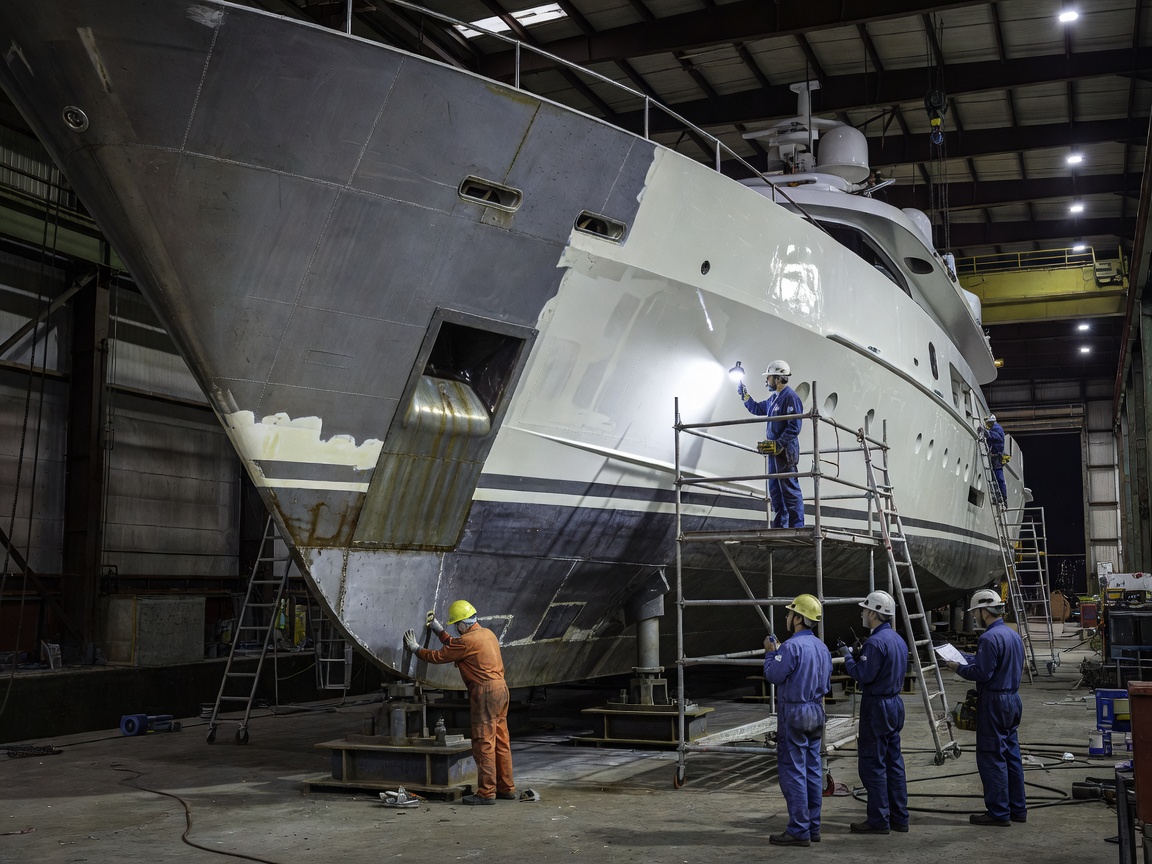
A 55-meter steel-hull displacement superyacht entered drydock after six years of international cruising. Operational telemetry reported an unexpected 4.2 knot speed loss at max engine output (1,800 RPM), accompanied by excessive stern squatting and an 18.2% increase in specific fuel oil consumption.
"Hydrodynamic refitting does not always require costly structural re-building; targeted micro-geometry alterations to the bow bulb and stern interceptors can yield massive speed and efficiency returns."
Sub-Millimeter LiDAR Laser Hull Topography
Rankripplepremier naval architects conducted full sub-millimeter LiDAR scans of the underwater hull surface during yard hauling. The digital point-cloud revealed localized hull plate deformation near the forward shoulder and an unoptimized bow bulb transition radius that generated destructive wave interference at cruising speeds.
CFD Mesh Re-Analysis & Refit Execution
Using our multi-phase RANS solver suite, the naval architecture team calculated three design iterations for composite bow bulb fairings and adjustable stern interceptor blades:
| Refit Parameter | Pre-Refit Baseline | Post-Refit Sea Trial | Net Improvement |
|---|---|---|---|
| Top Speed (1800 RPM) | 14.8 Knots | 19.0 Knots | +4.2 Knots |
| Cruise Fuel Burn (14 kts) | 420 L / Hour | 360 L / Hour | -14.3% Fuel Saved |
| Running Stern Squat Angle | +3.8° Pitch Up | +1.4° Optimal Trim | 2.4° Trim Correction |
Sea Trial Verification
Official sea trials conducted off Newport, RI confirmed full restoration of the vessel's original sprint velocity while achieving a net 14.3% fuel reduction at standard 14-knot long-range cruising speed.
Request a Hull Audit Consultation
Learn how our laser scanning and computational fluid dynamics team can optimize your vessel's upcoming drydock refit schedule.
Schedule Engineering Audit →